As we have said elsewhere, playing an incorrectly sounding instrument works badly on nerves :)
(reciprocally of
the Noble impact which the playing of exquisite music has on our Brains)
Usually, harpists themselves tune very well their harps but there is a VERY IMPORTANT remark
to be made:
/!\ All strings must be tuned only in flat, i.e. on the upper position of the pedals!!! Only in Ces dur!!! Never in C dur!!!
The excessive string pressure bends the pins, turns, i.e. unscrews them, turns the discs too and RUINS THE WHOLE REGULATION!!!
If tuning is NOT done in FLAT we have to remember the sentence: "Harpists spend 90% of their time tuning their harps and 10% playing out of tune..."
by Igor Stravinsky :D
Otherwise, if no direct damage occurs, the tension remains mostly in the area between the pin(s) and the disc(s) which are meant to fix the strings
(i.e. to prevent sliding)
therefore, the required tune is reached after severe overloading of this upper string part when discs are attached to it.
When pulling the string while playing, or at the pedal switch, the tension of the upper part is released and ... "the opera goes nuts" :)
If regulation is lost and a well tuned flat note is transformed by its pedal to a false "natural" or "sharp" tone which is actually the important
one to sound, it is smart to tune ONCE the flat with the necessary correction (as memorized from the indicator) so that the needed one sounds
correctly after switching, instead of tuning 10 times directly the natural or the sharp!!!
Regulation of the discs is absolutely necessary if the strings are new, different in material, or very old - in those cases they are not
the same anymore (the elasticity changes) and the previous fixation of the disc pins is false or causes buzzes.
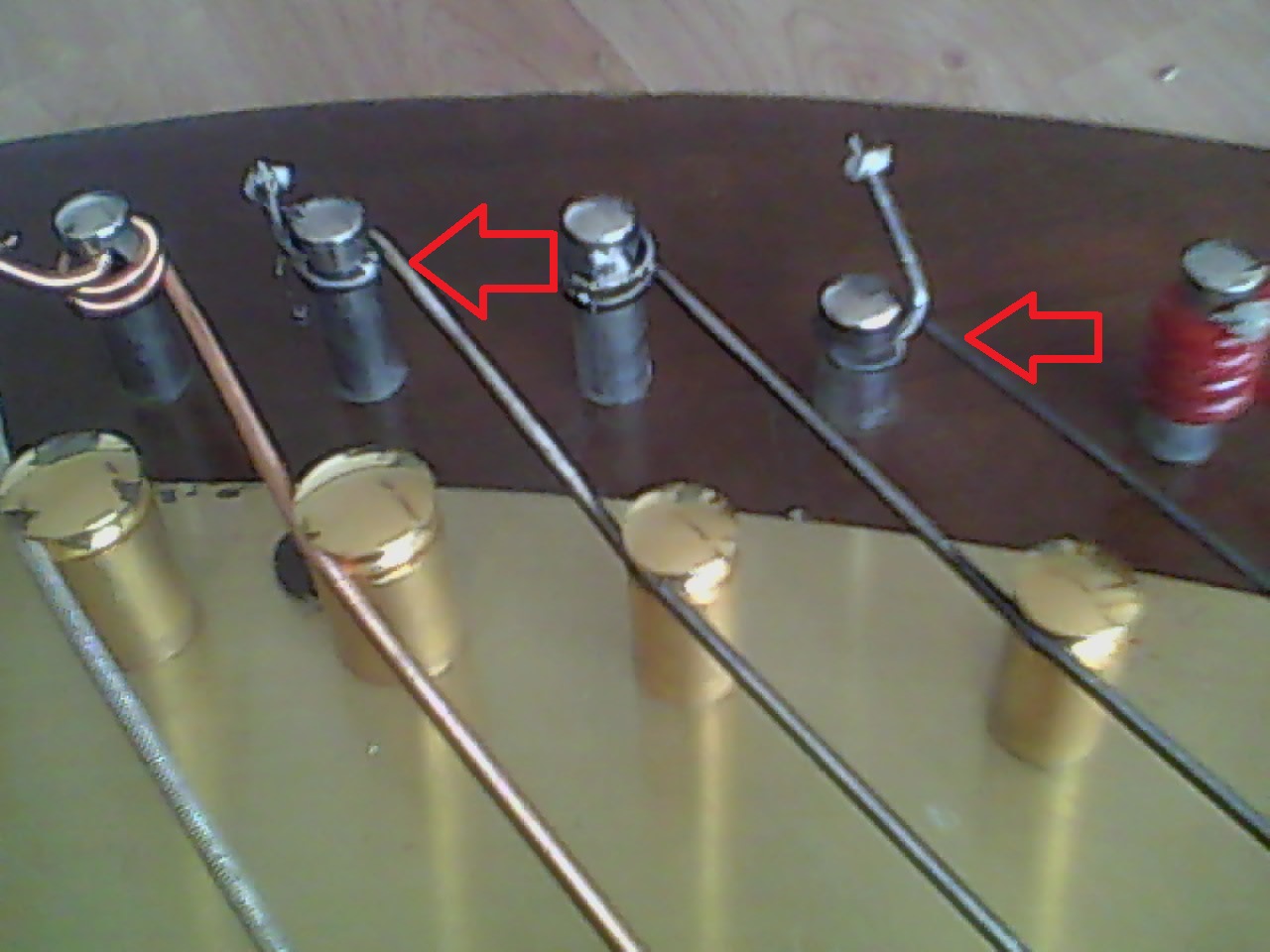
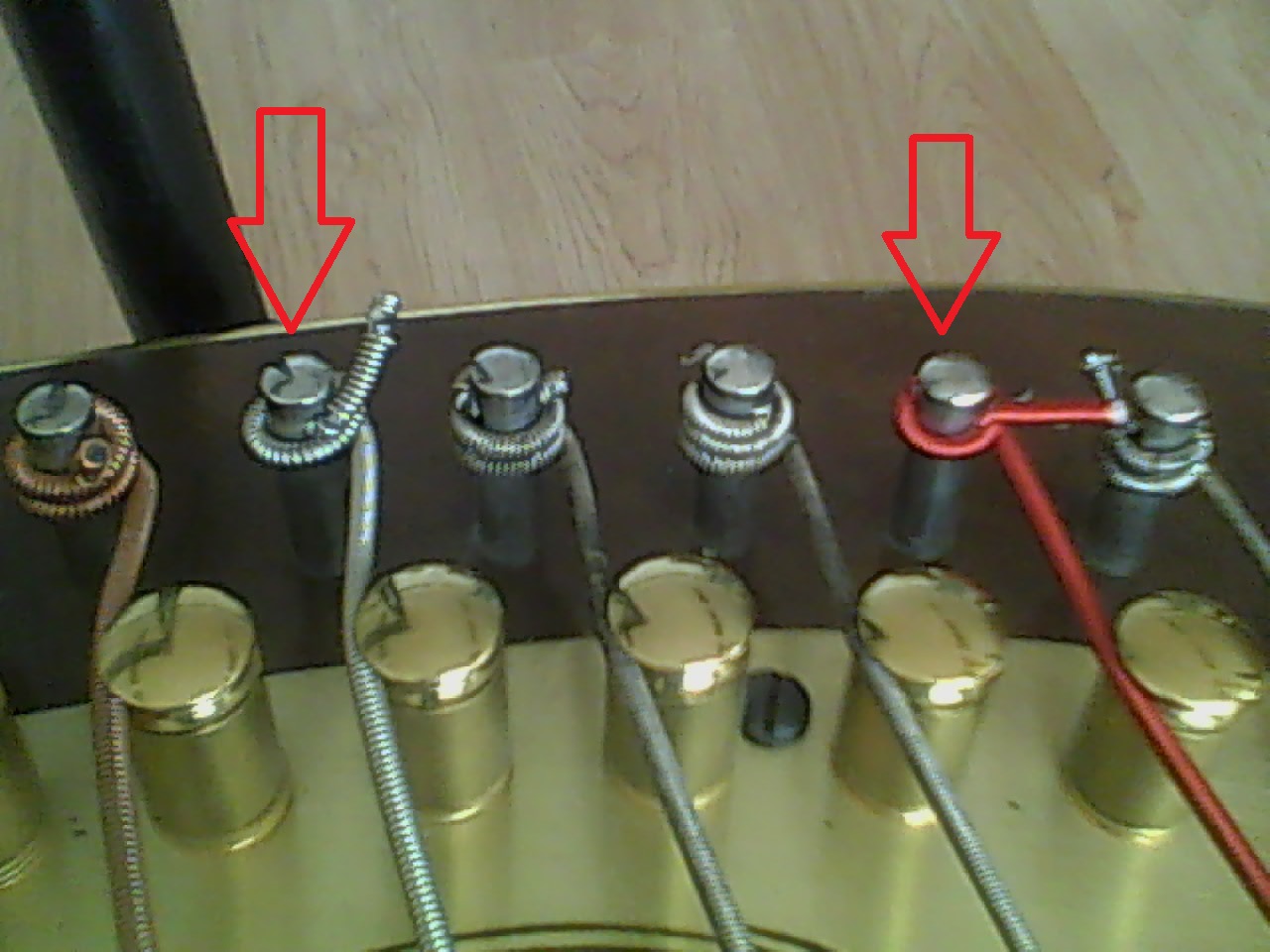
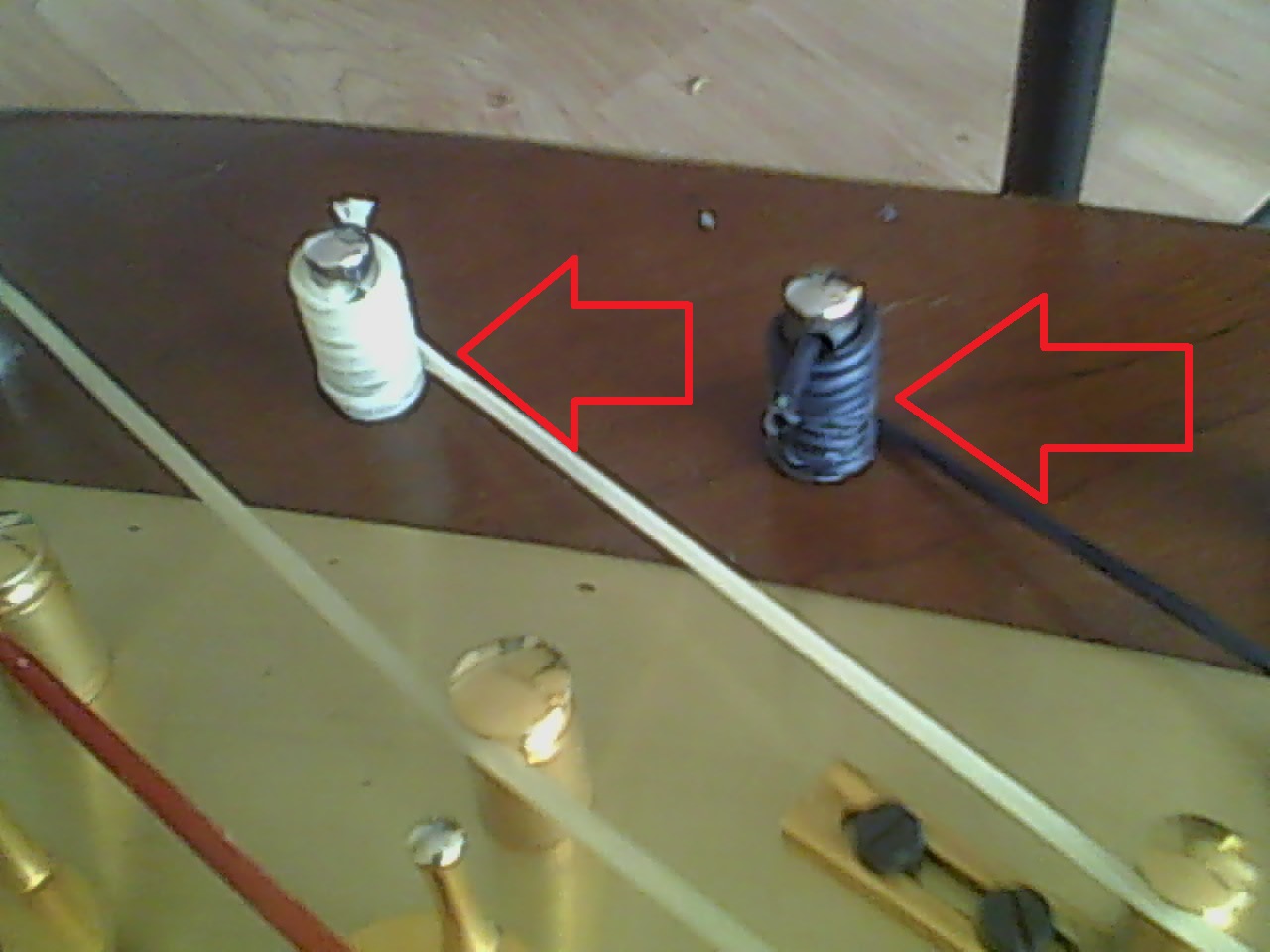
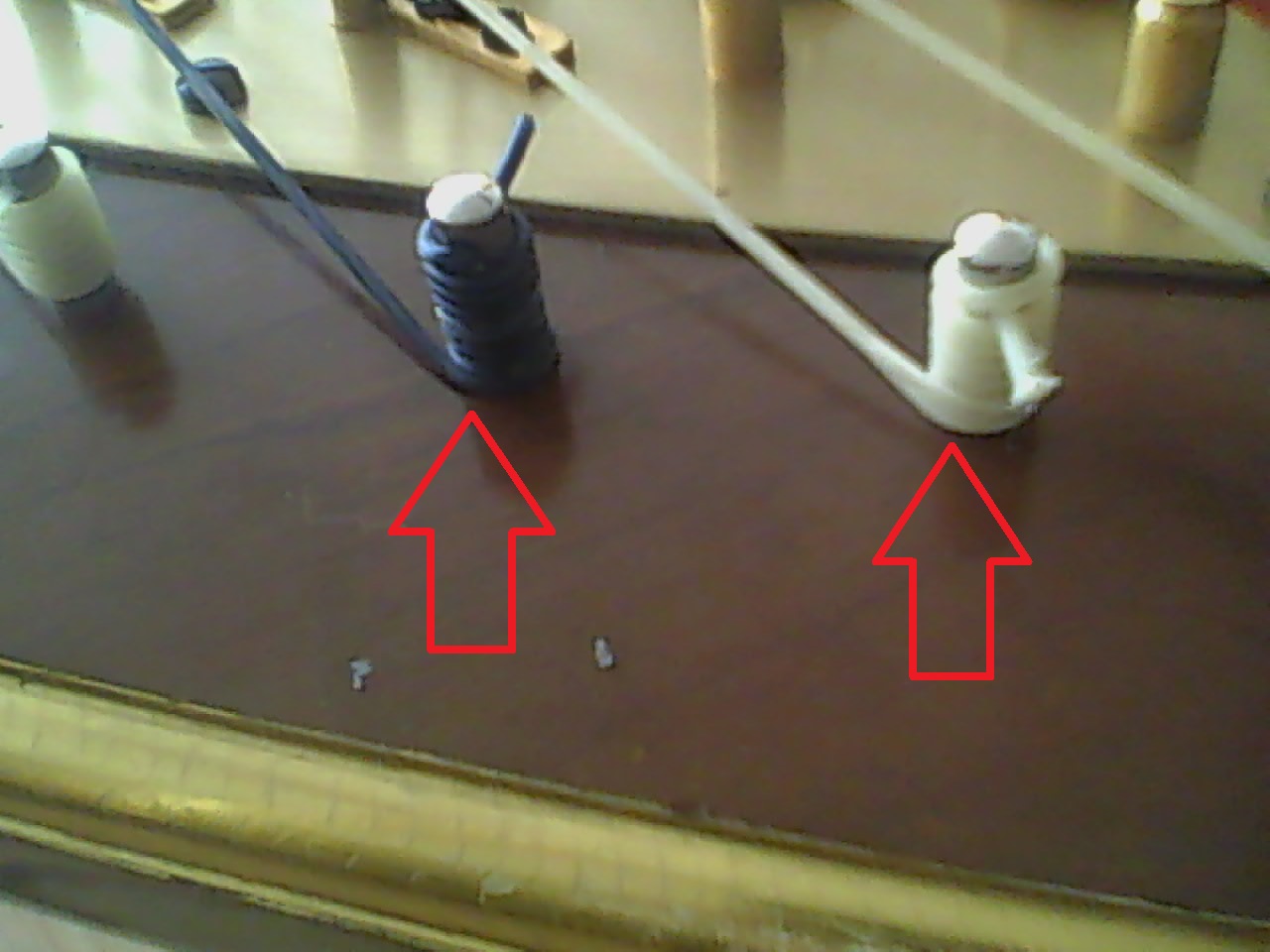
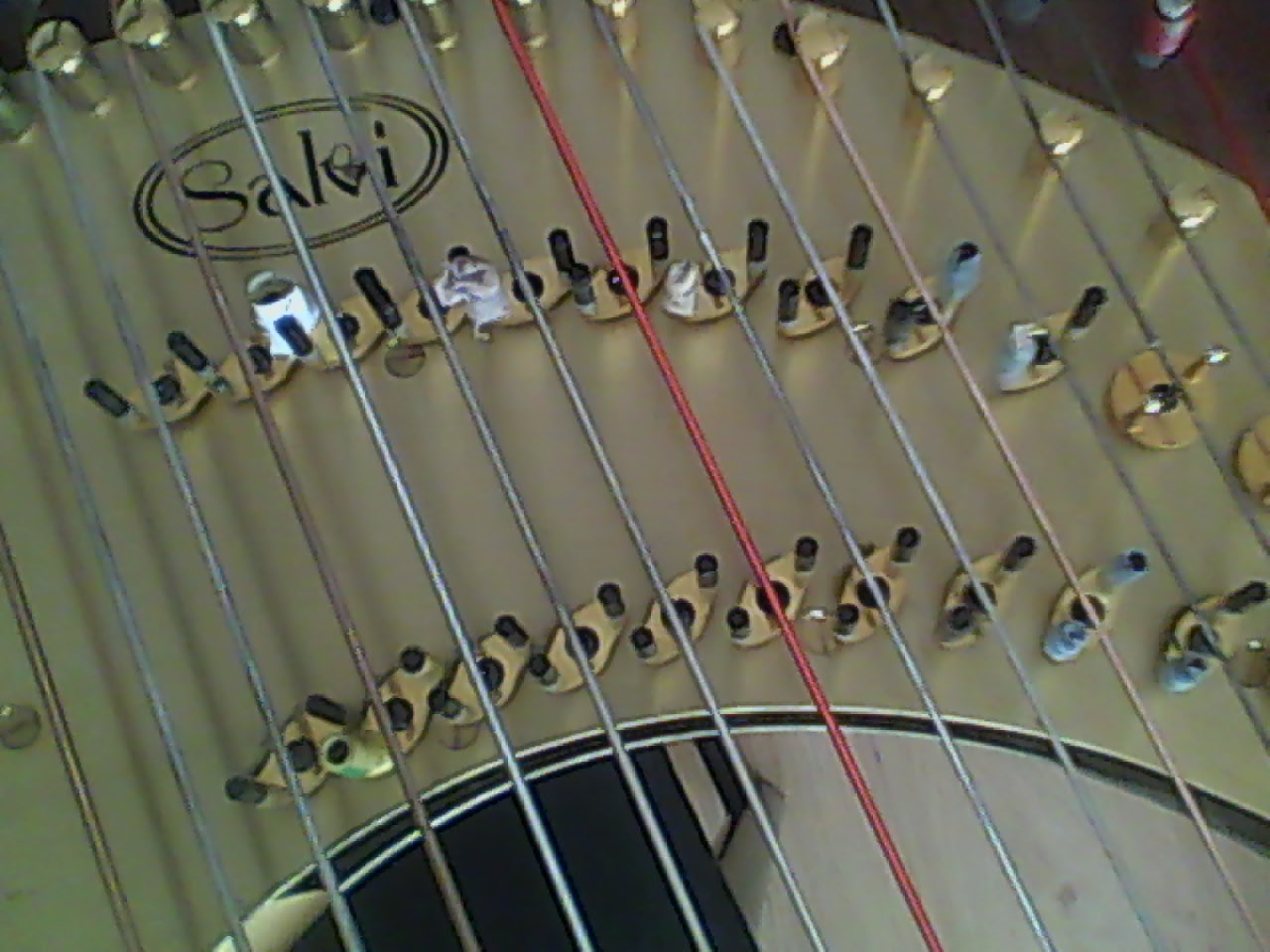
Usually, the strings become thinner, stiffer and harder with ageing and start buzzing. That makes the harpist put a tape or a small tube on the pin.
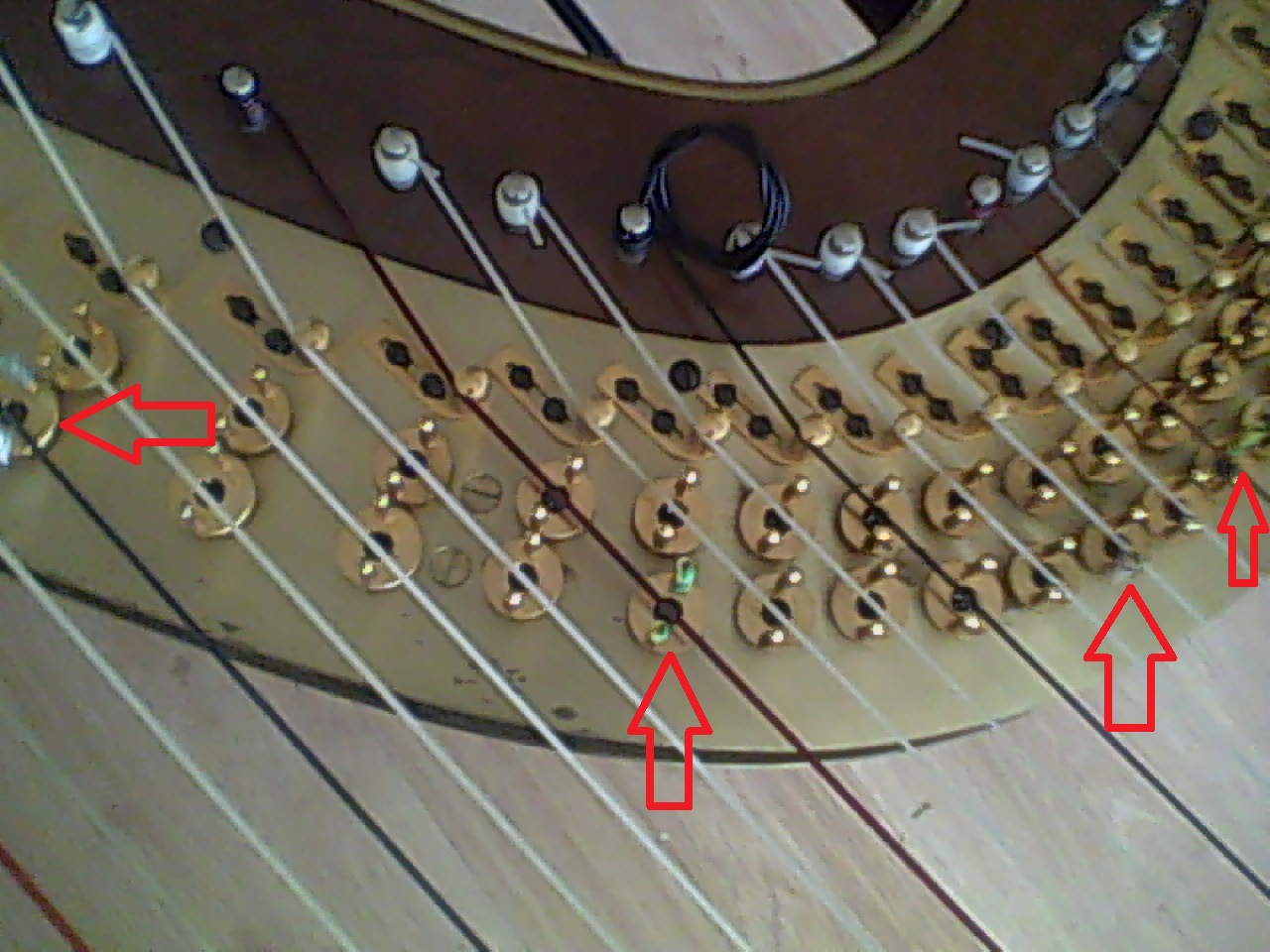
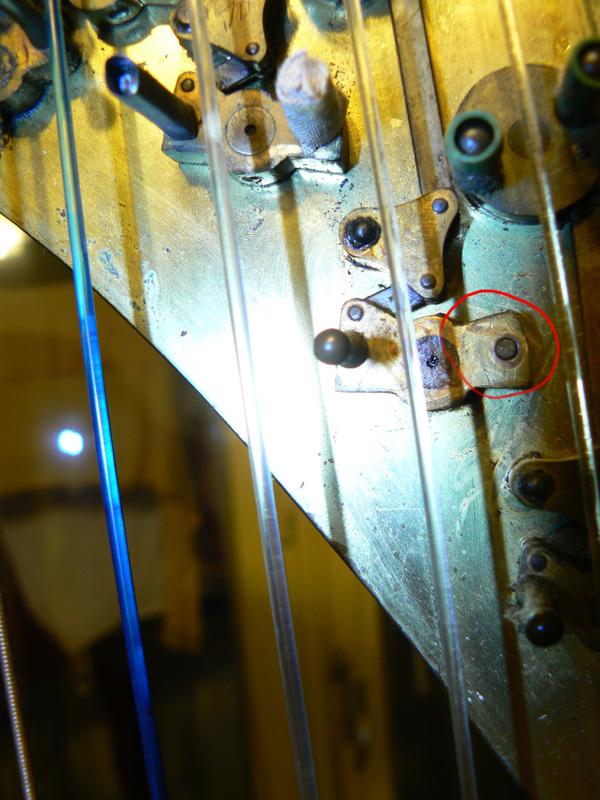
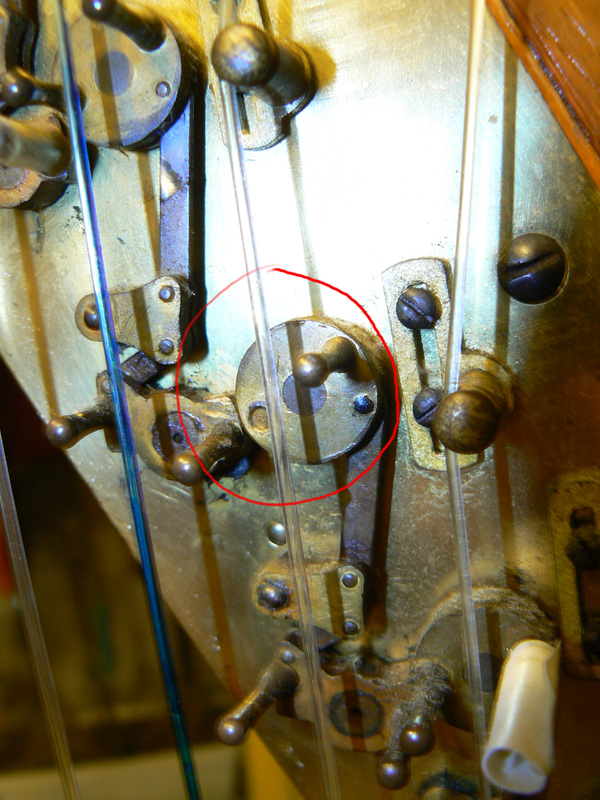
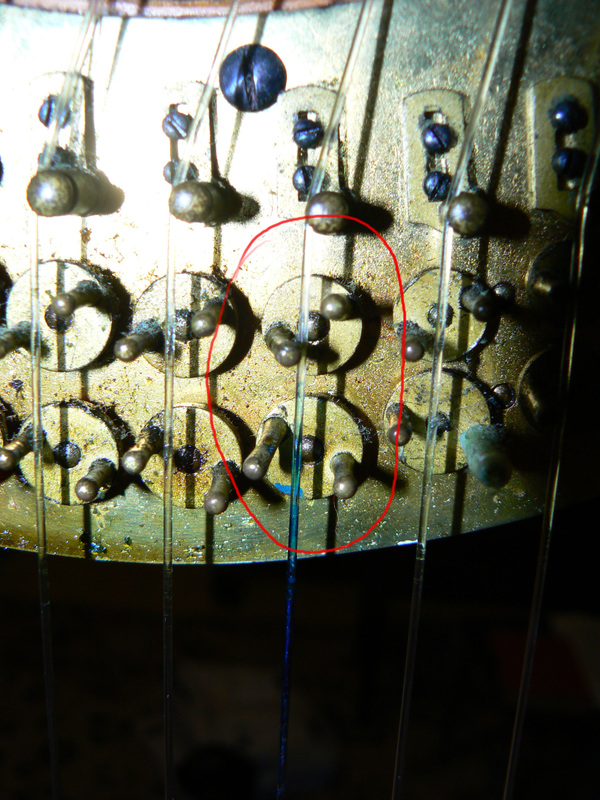
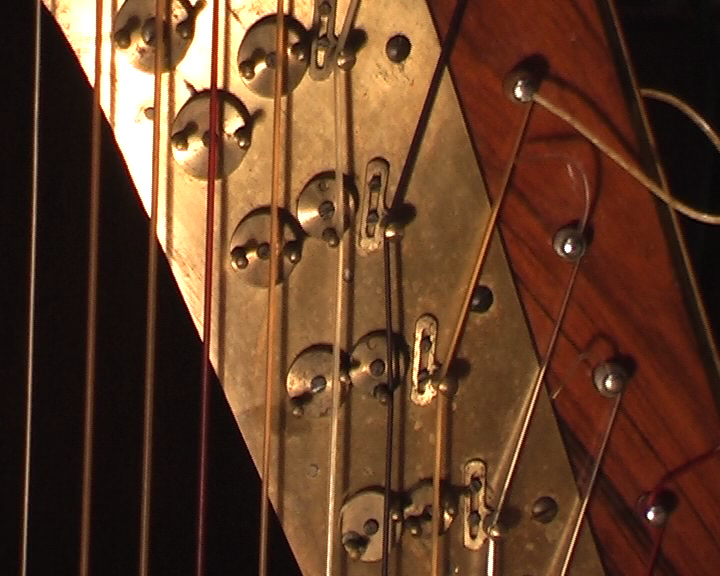
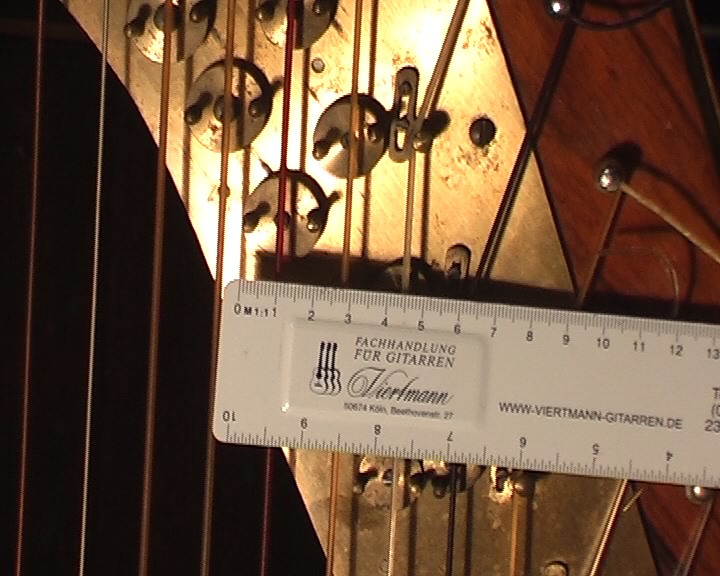
The result is overload on the pins which break, unfortunately not immediately at the moment but slowly in time and in a situation
the harpist never expects. See pictures below. This costs 20 to 40 times more to repair (spare parts are very expensive indeed) plus
the efforts to extract the broken part and the huge problem at the concert.
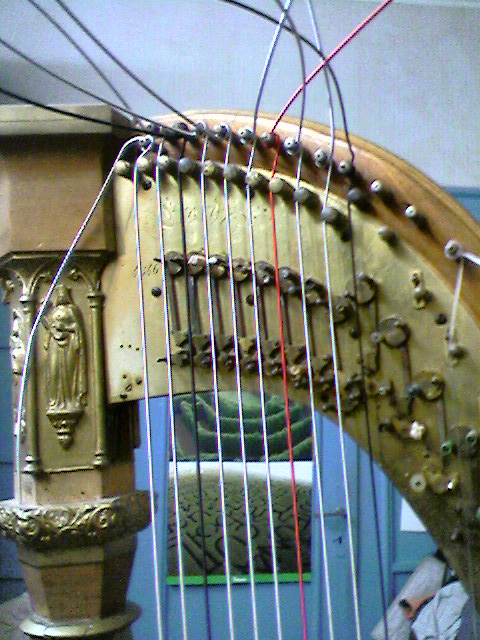
It is a good idea to call the harp technician two weeks after some strings have been replaced with new ones (with careful
fixation to their tuning pins to prevent strings from slipping through the pin holes - at least 3 windings but not too
many - see the following pictures). More ideas to fix the strings against sliding, especially thin ones => via e-mail.
When a harp goes false or starts buzzing or if there are strange noises that come from the harp and not from the lamp nearby :) very often it is
because of:
... the replacement of some strings when the new ones have different elasticity or thickness and the discs should be regulated - the ones that are
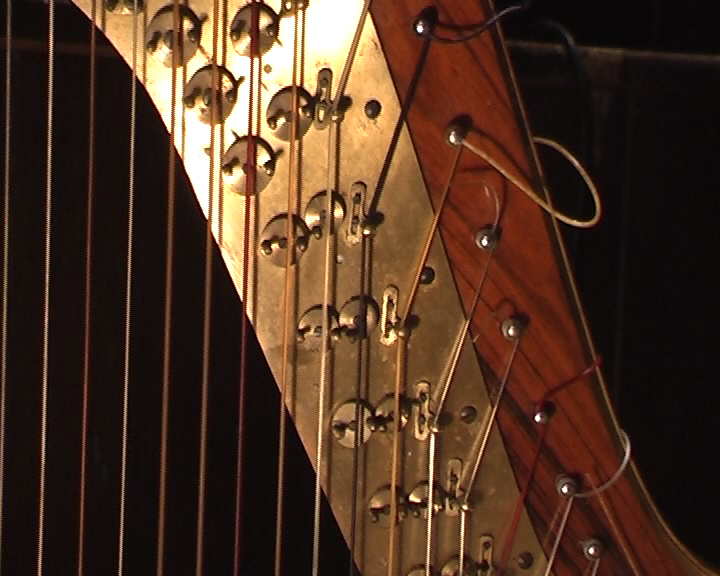
moved by 7 very long rods inside the column connected to the 7 pedals - each one with 3 slots/positions;
...deformation of the soundboard, base and column due to settling down of a harp which is under the heavy stress of 47 strings trying all the time
to make the harp "shorter" (with the help of humidity changes especially if breeze is around), and sometimes the sound board warps to the left and
the strings start buzzing in flat;
... wearing out of the pedal felts which change the pedal positions and therefore all the relevant 90 pin-discs in the action;
... deformation of the disc pins (God-forbid). The latter one is very often result of the experiments of the harpist to prevent buzzing by
putting tape or tube/hose on the pin which makes it tight but increases abnormally the tension of the string on it. If this is the upper disc
producing tuning from "flat" to "natural", it evidently influences the fixation of the lower disc which is for the "natural" to "sharp" tuning!
... problems which very often have to do with the tuning pins which start sliding in their holes due to several different reasons.
Those are things I can see if close pictures are made and sent to me and information is shared as soon as possible,
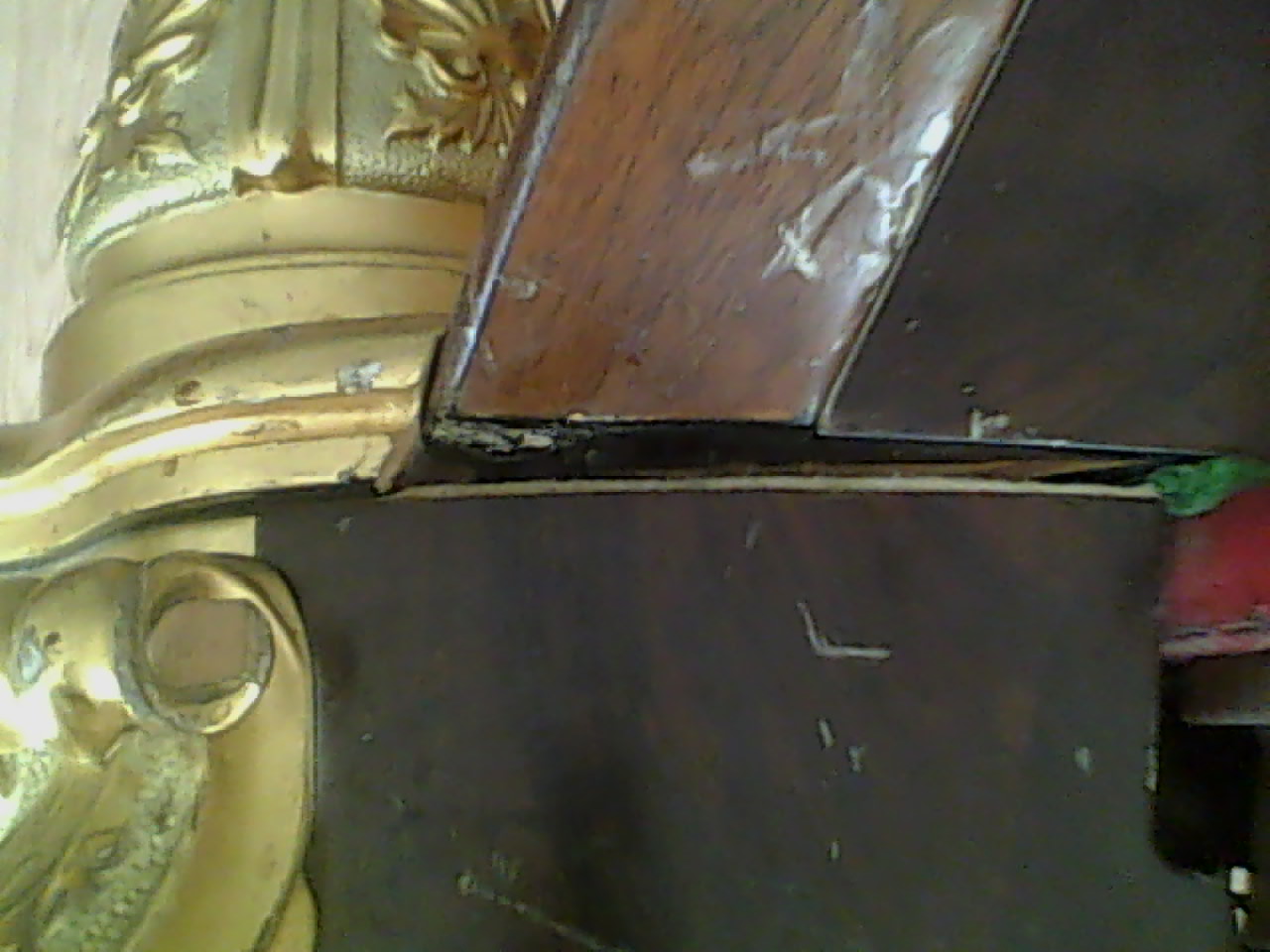
i.e. torn pedal felt strips, flatness of the sound board, extra "my-tube inventions" on the harp action - plus cracks, creep (as seen in
HARP REPAIR), rust, stain, corrosion, oxidation and
other clues.
Unfortunately pictures do not show when the Harps settled down so much that the rods in the column (since they remain the same in length)
appear to be "longer" than before. This is easy to see as "over-motion" in the upper disc when the pedal is slowly moved from second slot (natural)
to third slot (sharp #) - SEE ONLY the upper disc if turns just a little bit further when it must be absolutely still - only the sharp disc must
move this time! This is very dangerous because it twists and soon breaks the rod due to fatigue bending.
Those rods (2 m long and 3 mm thin) one cannot buy in the hardware store! :(
Meanwhile over-motion brings excessive pressure to the natural disc when the natural sound is already reached. THIS MAKES REGULATION in Sharp(#)
IMPOSSIBLE since it is always higher due to the additional pressure of the upper disc! Not to mention the overload on the attached pins ready to
break, or the new buzz in flat caused by the not attached disc pins which are closer now.
IMPORTANT!!!
If any part is broken, please find it and keep it (with all the broken particles) so that the precise size and shape is seen and measured and even
maybe repaired without the very expensive catalog import from far and away abroad.
Sorry but standardization in harp spare parts nomenclature and constructions between the manufacturers is just a dream and one cannot
possibly foresee the step, size and pitch of the particular screw thread windings. Details in musical instruments differ very very much even in
the models of one and the same firm, company or manufacturer - they are not standardized as the car spare parts.
And for each one of those tasks I need another set of instruments which I will certainly bring gladly ONLY after a conversation with the musician
who plays the harp.
Some of the problems mentioned above:
If you wish to hear or read more about these or other topics:
CALL OR WRITE!